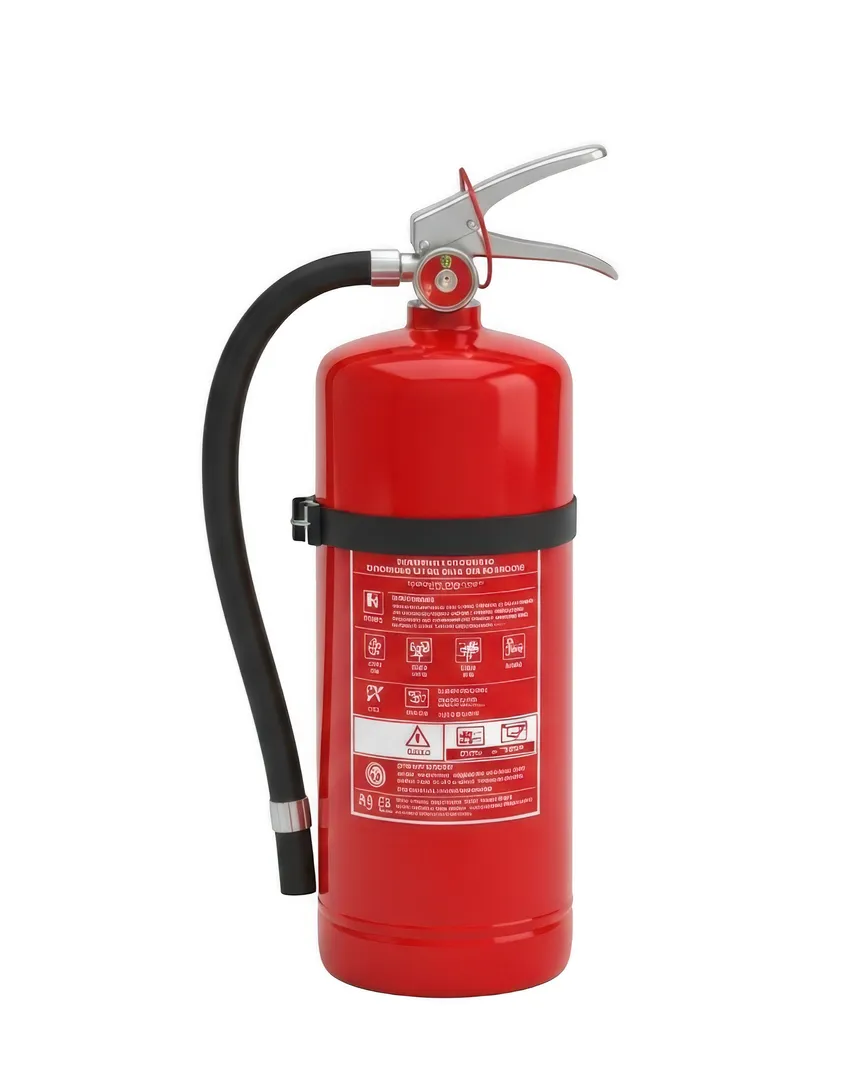
The correct extinguisher depends on the burning fuel, whether equipment remains energised, how quickly the fire can grow, and what damage the agent will cause after discharge. By the end, you will be able to identify the hazard, interpret the rating, reject unsafe options, and specify placement and equipment for each area.
Key takeaways
- Identify the burning fuel before choosing an extinguisher.
- Check the agent’s exclusions for energized equipment, cooking oil and combustible metals.
- Compare fire ratings, discharge performance and access distance.
- Convert each inspected hazard into a written procurement specification.
Start with the fuel, not the extinguisher label
Identify the burning fuel and operating condition before reading an extinguisher label. A fire involving paper and packaging needs a different agent from one involving diesel, LPG, an energized panel, cooking oil, or magnesium shavings.
- Class A fires: paper, wood, textiles, cardboard and other ordinary combustibles.
- Class B fires: diesel, petrol, solvents, paints and other flammable liquids. A burning liquid can spread when hit with a water stream.
- Class C fires: under the NFPA system, energized electrical equipment. This label applies only while power remains on; after isolation, classify the remaining fire by its fuel.
- Class D fires: combustible metals such as magnesium, sodium, potassium or aluminium powder.
- Cooking-oil fires: Class K under NFPA and Class F under EN 2. They require a cooking-specific assessment, not an assumed ABC solution.
Do not treat class letters as universal. EN 2 does not create a separate electrical fire class and uses Class C for flammable gases; Indian procurement documents and site assessments can follow a different classification basis. State the standard and rating system before specifying an extinguisher.
Check whether equipment is energized, whether a gas is leaking, and whether lithium-ion cells are undergoing thermal runaway. Water or foam is unsafe on energized equipment and burning flammable liquids unless the product is specifically listed for that use.
A portable extinguisher suits an incipient fire with a clear escape route, not a fast-growing, smoke-filled, concealed or pressurised-gas fire; evacuate and raise the alarm instead.
Match the extinguishing agent to the hazard and its exclusions
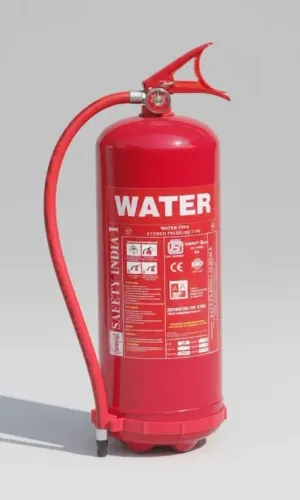
The agent must match both the fuel and the conditions at the fire. A water extinguisher suits Class A paper, wood, cloth and packaging fires; do not use it on burning diesel, solvents, LPG, energised panels or reactive metals.
A foam extinguisher covers many Class A and Class B liquid fires, but keep it away from live electrical equipment unless its listing specifically permits that use.
| Agent | Choose it for | Exclusions and limitations |
|---|---|---|
| Water | Paper, wood, textiles and packaging | Never apply to flammable liquids, live electrical equipment or reactive metals |
| Foam | Class A materials and diesel or solvent surface fires | Not for energised equipment, LPG leaks or metal fires |
| Dry chemical powder | Broad protection in offices, workshops and plant areas | ABC powder leaves corrosive, difficult-to-remove residue; it is not approval for every battery or metal fire |
| CO2 | Energised electrical equipment and some flammable-liquid fires | CO2 extinguisher exclusions include deep-seated combustibles, hot surfaces and poorly ventilated rooms; reignition and frost injury remain risks |
| Wet chemical | Commercial cooking oil and fat fires | Use a Class K/F unit; it does not replace fixed hood-and-duct suppression |
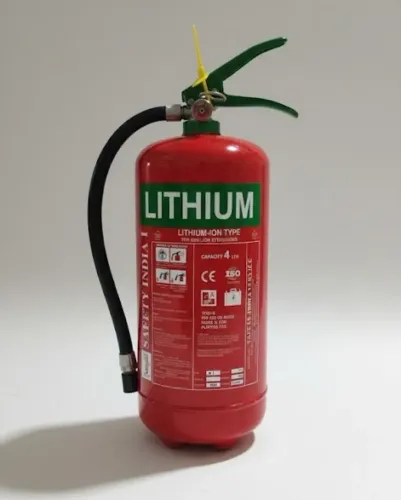
| Specialist agent | Lithium-ion thermal runaway or a named metal such as magnesium or sodium | Select the agent tested for that battery or metal; water, foam, CO2 and ordinary powders can intensify or fail |
An ABC unit is not a universal answer. For servers, battery storage and sensitive machinery, verify the clean agent’s listing, enclosure limits, ventilation requirements and approach distance rather than assuming “clean agent” means safe.
Treat electrical, battery, cooking and metal fires as specialist risks
A label alone does not make one extinguisher suitable for every specialist hazard. State the standard used—such as IS 2190, EN 2 or NFPA 10—because Class C and Class K do not mean the same thing across systems.
| Hazard | Selection decision | Critical exclusion |
|---|---|---|
| Energised electrical equipment | Use an agent listed for electrical use, commonly CO2 or suitable dry chemical; isolate power before tackling the fuel beneath it. | Never apply water or foam unless the product is specifically tested and listed for energised electrical equipment. |
| Lithium-ion batteries | Choose an extinguisher specifically evaluated for lithium-ion battery thermal runaway, and provide cooling and re-ignition controls. | An ABC rating does not prove control of a damaged battery, module or storage rack; a knocked-down flame can return. |
| Cooking oils and fats | Use a wet-chemical Class K approach under NFPA terminology, or the equivalent Class F designation under EN 2. | Do not substitute a generic ABC unit. The appliance, hood, duct and fixed suppression listing must work together. |
| Combustible metals | Specify a Class D agent for the exact metal, such as magnesium, sodium, potassium, titanium or metal powder. | Water, foam, CO2 and ordinary dry chemicals can intensify the reaction or fail completely. |
A Class K fire extinguisher is not automatically a Class F fire extinguisher. Put the chosen standard and rating on the procurement document. High-efficiency fryers can reflash after surface flames disappear, while metal fires demand a powder tested for that particular chemistry.
Compare ratings, discharge performance and placement before buying
Choose by the fire extinguisher fire rating and the hazard’s travel distance, not by cylinder weight or the number of floors. The rating comes from a standardised fire test; it is not a statement of agent volume or the area of every possible fire.
| Decision factor | What to compare | Buying implication |
|---|---|---|
| Fire rating | The listed rating for the identified fuel and applicable standard, such as IS 2190, EN 3 or NFPA 10 | Select the rating required for that hazard; do not treat “ABC” as universal approval |
| Agent quantity | Kilograms or litres of extinguishing agent | Use it to compare capacity only after comparing the rating |
| Discharge duration | How long the unit delivers agent at its stated pressure | A short discharge can leave insufficient time to control a spreading fire |
| Approach limit | The manufacturer’s safe approach distance and discharge limitations | Keep operators outside electrical, heat and splash danger zones |
Position units on the route to the hazard, with handles accessible, signs visible and no storage blocking them. Measure travel distance from the likely fire point to the extinguisher; do not use “one per floor” as a design rule. Apply the maximum distances and hazard categories in the adopted code and site fire-risk assessment.
Place units near exits and circulation paths, then add dedicated units beside kitchens, flammable-liquid stores, electrical rooms, workshops and battery-charging areas. A high-rating extinguisher placed behind a locked door is less useful than a correctly rated unit reachable before smoke blocks the route.
Turn the site inspection into a procurement specification
Give the supplier a written schedule, not a request for “ABC extinguishers.” Base it on the applicable fire-risk assessment and IS 2190, then require the supplier to identify the applicable Indian Standard and rating system for every model.
- Site address, room names, floor plans, access constraints and ambient temperature range
- Fuel at each location: paper and packaging, diesel or solvents, LPG, cooking oil, energized panels, server equipment, lithium-ion batteries or combustible metals
- Ignition sources, electrical voltage, equipment sensitivity, battery chemistry and whether power can be isolated
- Required fire rating, agent type, cylinder capacity, discharge range and maximum travel distance
- An extinguisher placement plan showing mounting points, signs, clearance, visibility and access
- Any existing sprinkler, kitchen suppression, alarm, ventilation or gas-isolation system that affects selection
- Required product listing, Indian Standard marking, test documents, warranty, recharge method and approved spare parts
- Inspection, servicing, hydrostatic-test and replacement arrangements, including who will record each visit
For foam, specify the exact fuel, concentrate type, proportioning method and application rate. Ask whether it contains PFAS, and obtain drain-down, compatibility and environmental-disposal information before accepting fluorinated or fluorine-free foam.
For CO2, clean agent, powder or wet chemical units, require enclosure size, ventilation limits, exposure information and the manufacturer’s minimum approach distance. Safety India Service can use this schedule to distinguish a CO2 unit for a listed electrical hazard from one incorrectly selected by cylinder weight alone.
Recheck the final equipment schedule against the placement plan before delivery.
Related products
 | Foam Fire Extinguisher Safety India Services Foam Fire Extinguishers provide a fast, powerful means of tackling flammable liquids. View product → |
 | Water Fire Extinguisher Ensure maximum fire safety with our high-performance Water Fire Extinguisher, designed for Class A fires involving paper, wood, cloth, and other... View product → |
Frequently asked questions
How do I choose a fire extinguisher for a specific hazard?
Identify the burning fuel and operating condition first, then match an agent whose fire rating covers that hazard.
Why do electrical fires need special consideration?
An energized panel requires an agent suitable for electrical equipment and a safe operating method; do not choose by fuel class alone.
What extinguisher is suitable for cooking-oil fires?
Cooking oil is a specialist risk. Select an extinguisher specifically rated for that hazard rather than relying on a general-purpose unit.
What should I compare before buying extinguishers?
Compare the fire rating, extinguishing agent, discharge performance, exclusions, service requirements and placement against the site inspection.
Related products
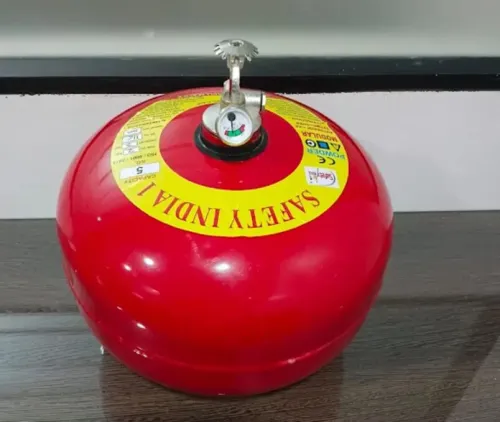
 | Modular Fire Extinguisher Safety India Service brings you high-performance Modular Fire Extinguishers designed for automatic protection in high-risk areas. View product → |
 | CO2 Based Fire Extinguishers CO₂ Fire Extinguishers from Safety India Service are designed for fast and effective protection against Class B & electrical fires. View product → |
 | ABC Fire Extinguishers Ensure complete fire protection with our high-quality ABC Fire Extinguishers, designed to tackle Class A, B, and C fires effectively. View product → |
 | Lithium-ion Fire Extinguishers Lithium-ion Fire Extinguishers Protect your home, office, and industrial spaces from modern battery fires with our advanced Lithium-Ion Fire Extinguishers. View product → |