Water is suitable when the fuel is an ordinary combustible burning as a solid surface and the fire is still small enough to attack without losing your escape route. You will be able to identify that boundary, operate the extinguisher correctly, and compare water with foam, CO2, and ABC dry powder before selecting equipment.
Key takeaways
- Use water only on small Class A fires involving ordinary solid combustibles.
- Never use water on live electrical equipment, flammable liquids, or cooking-oil fires.
- Keep your escape route behind you and leave immediately if conditions worsen.
- Choose equipment with a recognised rating, visible instructions, and scheduled maintenance.
What fire conditions make a water extinguisher suitable?
Water is suitable for a small Class A fire involving ordinary combustibles that burn as solids: wood, paper, cardboard, cotton and some plastics. Cooling and soaking the material helps stop hidden embers, but water fire extinguisher suitability depends on more than the cylinder’s capacity.
Before choosing one, check:
- The certified water extinguisher rating, such as an EN 3 rating, rather than only its litre capacity. A larger cylinder is not automatically suitable for a larger or different hazard.
- The label’s fire classes and instructions. Do not use ordinary water on flammable liquids, burning metals or other Class D hazards; some metals react dangerously with water.
- Whether electrical equipment is energised. Never discharge a conventional water extinguisher onto live switchboards, computers, appliances, sockets or machinery unless that specific model is tested, listed and labelled for electrical fires.
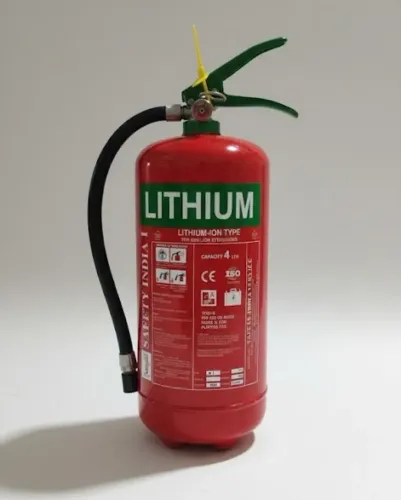
- Whether the area contains lithium-ion batteries. Water can cool cells and limit propagation, but a portable extinguisher may not stop thermal runaway or prevent re-ignition.
- The likely damage from discharge. Archives, data rooms and moisture-sensitive stock may need a listed water-mist or clean-agent alternative, even when the fuel is Class A.
Use a water extinguisher only on an incipient fire that you can control while keeping a clear escape route. Heavy smoke, ceiling-level flames or spreading fire means evacuate and call emergency services.
When is a fire too dangerous for extinguisher intervention?
Make one extinguisher attempt only for an incipient fire: small, contained, and involving a fuel the extinguisher is rated for. You must reach it without passing through smoke, and an unobstructed escape route must remain behind you. If either condition fails, evacuate and call emergency services.
Your fire extinguisher evacuation decision is immediate if you see:
- spreading flames, flames reaching the ceiling, or a ceiling fire
- heavy smoke that lowers visibility or makes breathing difficult
- a blocked exit or heat that prevents you from retreating safely
- fire larger than you can control from your escape path
- fire involving live electrical equipment, flammable liquid, or burning metal
Do not use a conventional water extinguisher on an energized switchboard, appliance, socket, computer, or machine. Water can create a lethal shock path, even when the voltage seems low.
Treat lithium-ion battery incidents as a separate emergency, not an ordinary small Class A fire. Water can cool cells and limit propagation, but a portable extinguisher may not stop thermal runaway or prevent re-ignition; isolate the area, evacuate, call emergency services, and follow the site’s monitoring plan.
Never apply water to a burning metal; the correct Class D agent must match the metal. After one unsuccessful attempt, leave immediately.
How do you use a water extinguisher without losing your escape route?
Knowing how to use a water fire extinguisher starts with protecting your exit, not chasing the flames. Use it only on a small Class A fire involving materials such as wood, paper, cardboard, cotton, or suitable plastics, and never on live electrical equipment or flammable liquids.
- Raise the alarm, call emergency services, and make sure someone knows where you are.
- Stand with your back toward a clear escape route, keeping the fire in front of you. Leave enough space to retreat without stepping through smoke or heat.
- Remove safety pin from the handle. If the model instructions permit a brief test, discharge it away from people before approaching.
- Aim at base of flames, not at the rising tips.
- Squeeze the handle and sweep side to side across the burning material. Move closer only if the flames shrink and your escape route remains open.
- Release the handle when the flames appear out, then back away while facing the fire.
Do not turn around or leave immediately after the flames go down. Watch for glowing embers, smoke returning, heat, or re-ignition behind furniture and beneath paper or fabric. If the fire grows, smoke thickens, the route becomes blocked, or the extinguisher empties, evacuate, close the door if safe, and stay out.
Which extinguisher is safer when electrical, liquid, or mixed hazards are present?
The safest choice is the extinguisher whose rating matches the fuel and electrical state. Water suits burning wood, paper, cardboard, cotton, and some plastics; it does not suit an energized electrical fire, flammable liquid fire, or cooking fat.
| Option | Use when | Avoid when |
|---|---|---|
| Water | Class A solids | Energized equipment, petrol, diesel, solvents, paint, oils, cooking fat |
| Foam | Class A and many Class B fires | Live electrical equipment or cooking oils unless the label specifically permits it |
| CO2 | Electrical equipment and small liquid fires | Deep-seated solids or confined spaces where re-ignition is likely |
| ABC dry powder extinguisher | Mixed Class A, B and C risks, including energized equipment where the label permits | Cooking fat; sensitive electronics, because powder contaminates and reduces visibility |
A CO2 extinguisher electrical fire response leaves little residue, but CO2 provides limited cooling. Re-ignition can follow, especially in equipment that remains energised; isolate power first if you can do so without entering danger.
“Water versus foam extinguisher” is not a universal choice. Foam can form a blanket over petrol, diesel, solvents, paint and some oils, while plain water can spread them. Check the individual label for electrical-test status and fire ratings: water mist and additive-based water are not automatically equivalent to ordinary water.
Cooking oil or cooking fat requires a Class K wet-chemical extinguisher, not water, foam, CO2 or standard ABC powder. For several hazards, place correctly rated extinguishers together rather than relying on one general-purpose unit.
How should you specify, place, and maintain a water extinguisher?
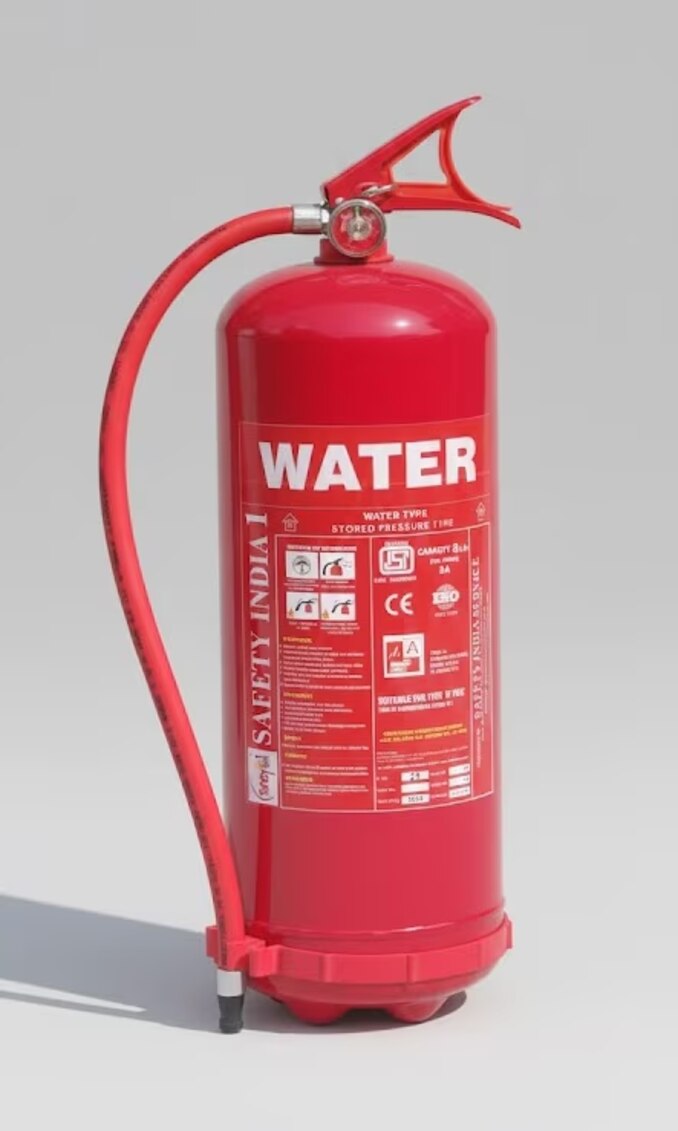
Read the water extinguisher fire rating, approval mark, agent type, discharge pattern, electrical-test status, and freezing temperature range on the label. Capacity alone proves little. Water mist, water spray, additives and ordinary water are different products; never substitute detergent or foam concentrate for the specified agent.
| Label or site check | What it determines | Action |
|---|---|---|
| Ordinary water, water spray or water mist | Discharge and approved fire classes | Match the certified rating to the hazard |
| Additives | Agent concentration and approval | Buy only the named, approved formulation |
| Temperature range | Whether freezing can disable the unit | Move it indoors or select a protected model |
| Class A location | Access to the extinguisher | Keep travel distance within 75 ft 22.9 m under OSHA; this does not make water suitable for Class B |
Keep the unit visible, unobstructed, mounted correctly, and away from impact, corrosive vapour and freezing exposure. Ask the supplier for the approval certificate, water or additive specification, electrical-test evidence, service history and replacement guidance. Safety India Service can help compare the label and site hazard rather than selecting by cylinder size.
Record OSHA inspection and maintenance checks. Perform the required visual inspection, arrange annual maintenance, and obtain internal servicing for stored-pressure units. Schedule the applicable hydrostatic test; water-type units commonly fall under a five-year interval, subject to the governing table and model.
Do not treat a lithium-ion battery fire as an ordinary Class A incident. Water can cool cells, but thermal runaway and re-ignition require isolation, smoke controls and post-incident monitoring.
Related product
 | Water Fire Extinguisher Ensure maximum fire safety with our high-performance Water Fire Extinguisher, designed for Class A fires involving paper, wood, cloth, and other... View product → |
Frequently asked questions
What fire conditions make a water extinguisher suitable?
Use it only on a small, contained Class A fire involving materials such as wood, paper, cardboard, cotton, or some plastics. The fire must be at an early stage, with limited smoke and a clear escape route.
When is a fire too dangerous for extinguisher intervention?
Evacuate instead when flames are spreading, smoke is thick or toxic, the fire blocks your exit, the room is heating rapidly, or one extinguisher application does not control the fire. Raise the alarm and call emergency services.
Can you use a water extinguisher on electrical or liquid fires?
No. Water can conduct electricity and spread burning flammable liquids. Use equipment specifically rated for the hazard, such as carbon dioxide for suitable electrical risks or dry chemical and foam units for appropriate liquid fires.
How do you use a water extinguisher without losing your escape route?
Raise the alarm, keep the exit behind you, stand several metres away, remove the safety pin, aim at the base of the flames, and sweep side to side. Stop and leave if the fire grows or your route becomes threatened.
How should you specify, place, and maintain a water extinguisher?
Select a unit with a clearly marked Class A rating and suitable capacity for the risk. Mount it where it is visible and accessible, keep it away from heat and obstruction, and arrange inspections, servicing, seal checks, pressure checks, and refilling after use.