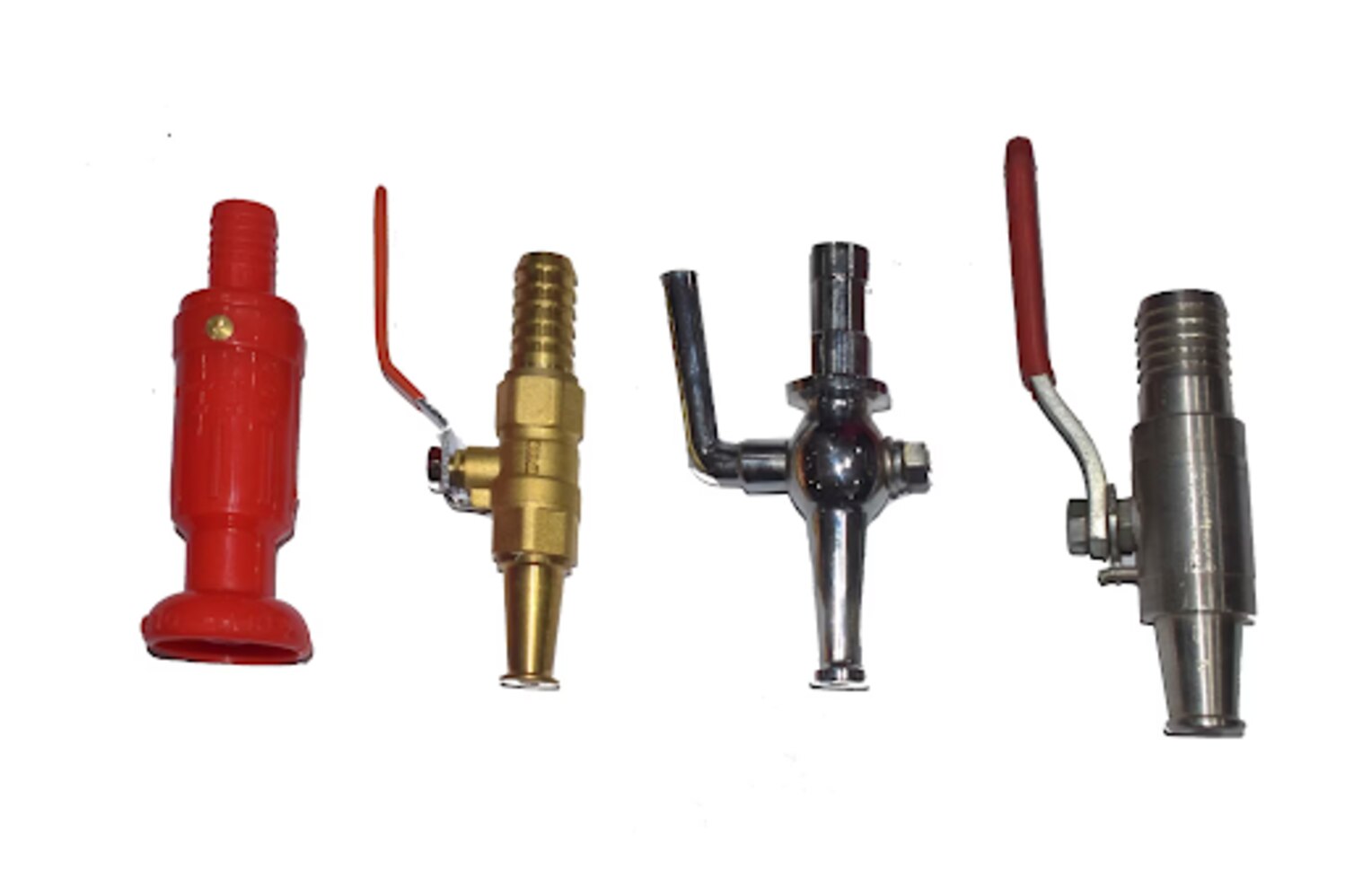
A hose reel nozzle gives the responder control at the point of application: you can start, stop, narrow, or spread the discharge without returning to the reel. By the end, you will know how nozzle positions affect reach, cooling, recoil, and safety, and how to decide whether the hose reel is suitable for the fire in front of you.
Key takeaways
- Use a shut-off to start, stop, and reduce flow without returning to the reel.
- Choose a straight jet for reach and spray for surface coverage and heat protection.
- Open the nozzle gradually and brace against reaction force before increasing flow.
- Withdraw when heat, smoke, fire size, or water supply exceeds your control.
How the nozzle changes discharge, reach, and reaction force
A hose reel nozzle controls water flow at your hand, so you can start, reduce, or stop discharge without returning to the reel valve. On a trigger design, squeezing farther opens the passage and increases discharge; releasing it reduces flow or activates the nozzle shut-off.
A lever or selector design performs the same job through its stated operating positions.
Where fitted, the controls change three operating effects:
- Shut-off stops discharge while you change position, pass through a doorway, or reassess the fire. A leaking or sticking shut-off is a functional defect.
- Straight jet concentrates the available water into a narrower stream, increasing reach and penetration. The stronger, faster stream also produces more reaction force against your hands.
- Spray spreads water across a wider area and can improve surface coverage and heat shielding, but it normally sacrifices reach. It does not create additional water.
Hold the nozzle firmly and open it gradually. As discharge rises, reaction force pushes the nozzle backward; a two-handed grip gives you better control, especially at the end of the hose. The nozzle cannot overcome a kinked hose, a partly closed valve, excessive elevation, or inadequate supply pressure.
Check residual pressure while water is flowing at or near the nozzle, not only static pressure with the nozzle closed.
When to use a shut-off, straight jet, or spray pattern
Choose the nozzle position according to distance, heat, and the need to move—not simply the largest visible discharge.
| Option | What it does | When to use it |
|---|---|---|
| shut-off position | Stops water positively | Pause before changing position, passing through a doorway, or reassessing conditions. A leaking or seized shut-off is a defect. |
| straight stream | Produces a concentrated straight jet with greater reach and penetration | Attack ordinary Class A combustibles from a safer distance when you need water to reach the seat of the fire. |
| spray pattern | Disperses water across a wider area, improving surface coverage and cooling | Wet exposed surfaces or cool hot conditions while maintaining distance. Expect less useful reach than a straight stream. |
A jet nozzle set to straight stream is the better choice when distance matters, but do not stand in the fire’s path to gain reach. Move to the spray pattern when a broader cooling effect helps, then return to a straight stream for penetration.
Neither position makes water safe for energized electrical equipment; use water only when the equipment, separation distance, nozzle, and procedure are specifically approved.
Test every operating position during functional checks. Debris, scale, damaged spray teeth, a blocked strainer, a seized selector ring, or a degraded seal can reduce output or prevent a positive shut-off. Confirm actual discharge rather than accepting a nozzle that merely looks present.
The pattern selector cannot correct inadequate supply pressure or losses in the hose reel, hose, valves, and fittings.
How to start the hose reel without losing control
A controlled start begins with the hose laid out, the escape route open behind you, and the nozzle pointed away from people, electrical equipment, and unstable burning material.
1. Pull the nozzle to the attack position and lay out a fully unwound hose where the installation instructions require it. Remove tight bends, kinks, pinches, and trapped sections; these restrictions reduce flow and increase handling force.
2. Keep the nozzle shut off while you check your footing, confirm the route behind you, and take a stable stance. Use a two-handed nozzle grip when reaction force, hose movement, or floor conditions make one-handed control unreliable.
3. Open the reel valve gradually. A sudden opening can make the hose jump and pull you off balance, especially if the line has retained pressure. Keep the nozzle aimed toward the fire area, not at a person or the floor beside your feet.
4. Open the nozzle slowly and select the required pattern only after you have control of the line. Watch the hose behind you; a partially closed valve or sharp bend can leave the nozzle with weak flow even when static pressure looked adequate.
5. Move forward only while you can keep the fire between you and no escape route blocked. Stop the discharge at the nozzle before changing position, and withdraw when heat, smoke, visibility, or hose movement defeats operator safety. A hose-reel nozzle cannot correct inadequate supply pressure or a restricted hose.
How to apply water to Class A fires—and when to withdraw
Aim at the base of flames, where the fuel is burning, rather than at the flame tips. On a Class A fire involving paper, wood, textiles, or similar materials, use a straight stream when you need reach, then sweep it across the burning surface in a controlled side-to-side motion.
Use spray for wider coverage and heat shielding, but do not assume spray makes an electrical approach safe.
- Keep the nozzle low and direct water onto the nearest burning area first. Work outward only when the flame front begins to shrink.
- Sweep across surfaces instead of holding the stream on one small spot. This cools more fuel and exposes fewer embers to renewed heating.
- Pause and reassess after each pass. If flames intensify, smoke thickens, the hose supply weakens, or heat prevents a safe approach, stop advancing.
- Withdraw with the nozzle pointed away from people, keep your escape route behind you, close the discharge if doing so does not delay escape, and activate the alarm.
A hose reel nozzle is the wrong choice for live electrical equipment unless the equipment, nozzle, separation distance, and procedure are specifically approved for water application. Do not use it on burning flammable liquids, reactive chemicals, or a fire that has outgrown a first-response attack.
Smoke logging the route, ceiling involvement, rapid fire spread, or loss of a clear exit means withdraw and call emergency responders.
What to verify before selecting or relying on a hose reel nozzle
Treat 30 L/min at 0.2 MPa as a benchmark for the relevant EN 671-1 hose-reel configuration, not a guaranteed output from every nozzle.
Measure residual pressure while water is flowing at or near the nozzle; a static gauge reading with the nozzle closed can hide friction loss, a partly closed valve, insufficient pump capacity, elevation, or simultaneous demand.
| Check | Accept | Reject |
|---|---|---|
| Performance | Flow data stated for each pattern and pressure; permitted operating-pressure range provided | “Adjustable” or “multi-purpose” with no test figures |
| Compatibility | Connection, hose diameter and length, reel valve, fittings, and strainer match the design | No confirmation that the nozzle suits the installed hose or inlet |
| Maintenance | Shut-off, selector ring, spray teeth, seals, strainer, hose, and actual discharge pass a functional check | Scale, debris, leaks, seized controls, damaged teeth, kinked hose, or inaccessible reel |
| Installation | Mounting, valve access, hose withdrawal, drainage, and local installation rules are documented | Selection based only on nozzle appearance or static pressure |
Use a flow test at the furthest or most demanding reel, then compare its result with the project design. A hydrant branch pipe comparison can expose a mistaken substitution: a hydrant outlet and hose reel nozzle do not share the same hose, valve, pressure-loss, or flow assumptions.
For procurement, ask Safety India Service to identify the nozzle’s test evidence, connection size, pressure range, and compatibility with your existing reel rather than accepting a catalogue label. Record discharge checks after installation and during scheduled inspections; EN 671-1 does not replace building-specific hydraulic design or local rules.
Related product
 | Hose Reel Nozzle Safety India Service offers a premium-quality Hose Reel Nozzle designed to deliver efficient water flow and quick response during fire emergencies. View product → |
Frequently asked questions
How does a hose reel nozzle change discharge, reach, and reaction force?
Opening the nozzle increases discharge. A straight jet usually gives greater reach, while higher flow also increases reaction force at your hands.
When should you use a shut-off, straight jet, or spray pattern?
Use the shut-off to start or stop flow, a straight jet for reach and penetration, and spray for wider coverage or added heat protection.
How do you start a hose reel without losing control?
Pull out enough hose, hold the nozzle securely, open the nozzle gradually, and adjust your stance as reaction force increases.
How should you apply water to a Class A fire?
Apply water to burning solid materials and nearby hot surfaces, sweep deliberately, and withdraw when conditions exceed your visibility, cooling, or water control.
What should you verify before relying on a hose reel nozzle?
Check the nozzle shut-off, pattern adjustment, hose condition, reel valve, water supply, mounting, access, and visible damage before use.