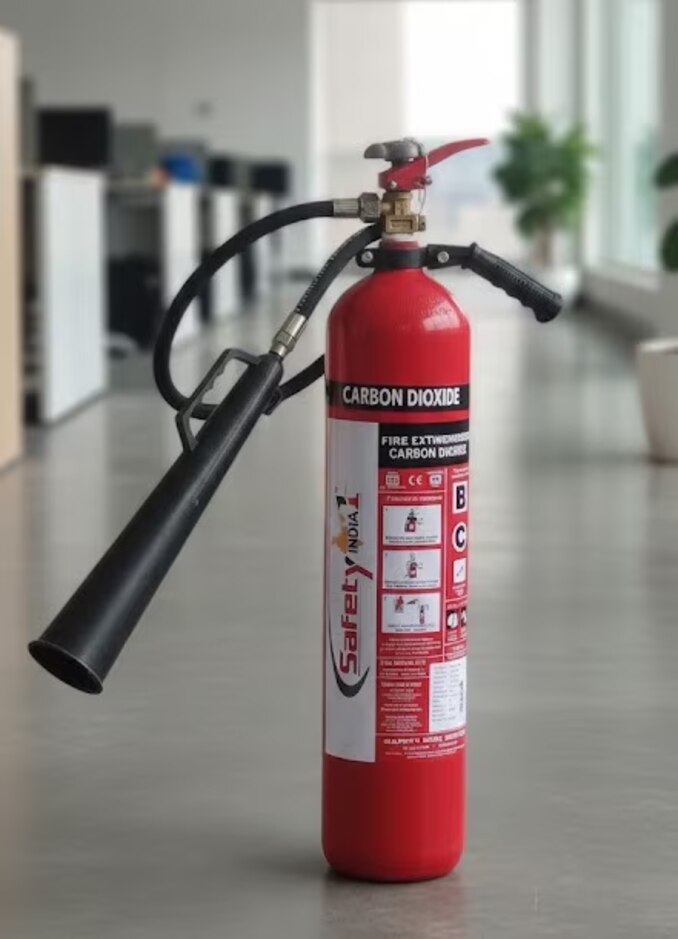
A CO2 extinguisher can knock down flames around live switchgear without leaving powder, foam, or water on the equipment, but it does not remove electrical energy, cool hidden fuel, or make a smoke-filled room safe to enter. By the end, you will know how to use one, when to stop, what hazards remain after discharge, and how to compare it with other extinguisher types.
Key takeaways
- Use CO2 for energised electrical equipment and incipient Class B liquid fires.
- Hold the insulated handle; never touch the discharge horn during use.
- Isolate power and check for re-ignition after flames disappear.
- Choose foam, dry powder, or water-based protection for unsuitable fuels.
What CO2 Extinguishes—and What the Fire Class Means
Choose a CO2 fire extinguisher for an incipient Class B flammable liquid fire or a fire involving energised electrical equipment. CO2 suppresses flames by displacing oxygen and provides limited cooling. It leaves no powder, foam, or water residue on computers, switchboards, control panels, and similar equipment.
The label needs careful reading because “Class C” does not mean the same thing in every classification system.
| Fire situation | Meaning under Indian Standard IS 2190 fire classes | CO2 decision |
|---|---|---|
| Class B flammable liquid fire | Petrol, solvents, paints, oils, and other flammable liquids | Suitable for a small, contained fire |
| Energised electrical equipment | Electrical energy is an ignition source, not a fuel class under IS 2190 | Suitable because CO2 is nonconductive |
| Class A fire | Wood, paper, textiles, rubber, and many plastics | Poor choice; hidden material can re-ignite |
| Class C fire | Flammable gases under IS 2190 | Control the gas supply first; select protection for the assessed hazard |
| Class F fire | Cooking oils and fats | Do not rely on CO2; use a specialised wet-chemical agent |
Some systems use “Class C” for electrical fires. That designation means the agent is nonconductive, not that the equipment is safe to touch after discharge.
Once power is isolated, classify the remaining fuel as Class A or B. CO2 also has little lasting cooling effect, so a hot liquid or concealed material can re-ignite after the gas disperses.
How to Discharge a CO2 Extinguisher Without Creating a New Hazard
Use a CO2 extinguisher only on a small, contained fire with a clear escape route behind you. Do not enter a smoke-filled room, cabinet, pit, or poorly ventilated space: discharged CO2 can displace oxygen and create a life-safety hazard.
Never touch the discharge horn during use; it becomes extremely cold and can cause a cold burn.
- Raise the alarm and call emergency services. Keep people away from the area.
- If you can do so without approaching live parts, have an authorized person isolate the electrical supply. The extinguisher’s Class C suitability means the agent is nonconductive, not that the equipment is safe to touch.
- Stand several feet away, with the exit behind you. Check that the fire is small and that smoke or heat will not trap you.
- Hold the extinguisher upright, remove safety pin, and keep your hand on the insulated handle.
- Aim at base of flame, not at the smoke or its upper edge.
- Squeeze the handle and sweep across fire from side to side. Move closer only if the flames shrink and your escape route remains open.
- Release the handle when the flames disappear, then withdraw. Stop immediately if the fire grows, the discharge empties, or flames re-ignite.
CO2 gives little lasting cooling. Do not use it as sole protection for burning cooking oil, paper, wood, textiles, or deep-seated plastics; the fire can return after the gas disperses.
Why Power Isolation and Re-Ignition Checks Still Matter
A darkened panel is not a safe panel. CO2 removes oxygen around the flame but provides little lasting cooling, so heated insulation, cable trays, filters, or polymer housings can keep smouldering and ignite again after the gas disperses. This is the central CO2 re-ignition risk.
1. Keep people clear and maintain an escape route. Ventilated rooms, extraction fans, and open doors disperse CO2 quickly, reducing its fire-suppression effect. In confined spaces, account for the CO2 asphyxiation risk and do not re-enter until the area has been ventilated and declared safe.
2. Arrange electrical isolation through an authorised person as soon as it can be done safely. A CO2 extinguisher is not a substitute for electrical isolation, and a Class C label means only that the agent is nonconductive; it does not make the equipment safe to touch.
3. Do not grab the discharge horn during or immediately after use. The CO2 discharge horn cold burn can cause frostbite, so hold only the insulated handle or grip provided.
4. After isolation, have a qualified person verify that the supply is de-energised before opening, moving, or examining the equipment. Look for smoke, heat, melted insulation, odour, glowing material, and concealed smouldering.
5. Watch the area for renewed smoke, heat, or flame. If the fire re-ignites, withdraw, raise the alarm, and call emergency services rather than treating a second discharge as proof that the equipment is safe.
When CO2 Is the Wrong Extinguisher for the Fuel
Choose another agent when the fuel needs lasting cooling, has hidden combustible material, or involves cooking oil. CO2 is clean and nonconductive, but it mainly displaces oxygen and cools the flame briefly; it does not make equipment safe to touch after discharge.
| Option | What it means | When it applies |
|---|---|---|
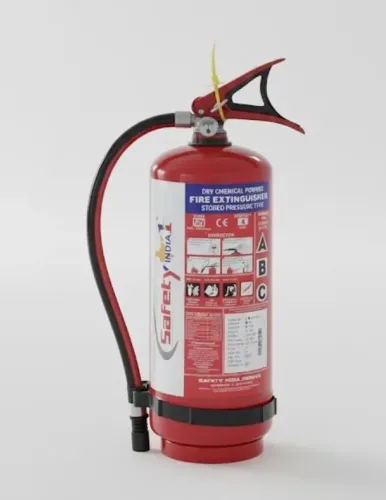
| ABC dry chemical | Powder interrupts combustion across several fuel classes | Choose it for mixed hazards, including a Class A fire wood paper clothia fuel load, flammable liquids, or energized equipment where residue is acceptable. CO2 versus ABC dry chemical: ABC offers broader coverage, while CO2 avoids contamination. |
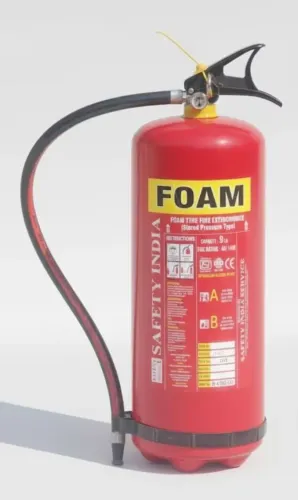
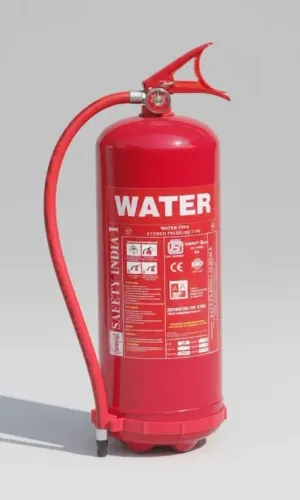
| Foam and water extinguisher | Water cools; foam also seals a liquid surface | Choose water for ordinary Class A fires involving wood, paper, cloth, and similar materials. Choose foam for flammable liquids where the equipment is de-energized. Never use water on energized electrical equipment or burning liquids unless the extinguisher is specifically rated for that use. |
| Clean-agent extinguisher | Nonconductive agent with little or no residue | Choose it for sensitive electronics when concealed insulation, filters, polymer housings, or re-ignition risk makes CO2 unsuitable. |
| Specialised agent | Agent matched to a particular fuel | Choose Class K or Class F for cooking oils and fats. CO2 can knock down flames while leaving oil hot enough to re-ignite. |
If power is isolated, classify the remaining fuel as Class A or B. Class C means the agent is nonconductive, not that the equipment is safe to touch.
How to Specify and Maintain CO2 Protection at Work
Start with the fire load, not the voltage label. Identify the enclosure, ventilation, cable insulation, filters, polymer housings and nearby liquids; CO2 can knock down flames while concealed material stays hot and re-ignites. Do not use it as sole protection for cooking oil or fat fires.
1. Match the extinguisher rating and quantity to the associated Class A or Class B hazard, because an electrical label does not create a separate universal sizing rule. Keep units visible, unobstructed and near exits, switchboards, control rooms and other electrical-risk areas without placing them where a fire could block escape.
2. Include power isolation in the emergency plan. Authorised personnel must de-energise exposed live parts when feasible; an extinguisher is not permission to work on live equipment.
3. Complete a portable extinguisher monthly inspection. Check the seal and pin, cylinder corrosion or dents, hose, horn, mounting, access and identification label; CO2 units commonly lack pressure gauges, so perform a gross-weight check against the marked full weight and remove any unit with unexplained loss.
4. Arrange the annual maintenance examination and record the CO2 cylinder hydrostatic test, which OSHA’s table specifies at five-year intervals for carbon-dioxide cylinders. Ask suppliers for the cylinder test date, service record, extinguisher rating and traceable manufacturer details.
Safety India Service can help a buyer compare CO2 units against the site’s concealed fuel load and maintenance records, rather than selecting equipment solely because computers or switchboards are present.
Related product
 | CO2 Based Fire Extinguishers CO₂ Fire Extinguishers from Safety India Service are designed for fast and effective protection against Class B & electrical fires. View product → |
Frequently asked questions
What fires can a CO2 extinguisher put out?
CO2 extinguishers are intended for incipient Class B flammable liquid fires and fires involving energised electrical equipment. They are not suitable for deep-seated Class A materials such as wood, paper, cloth, or rubbish.
How do you use a CO2 extinguisher safely?
Raise the alarm, keep an escape route behind you, remove the safety pin, aim at the base of the flames, and discharge in short sweeps. Hold the insulated handle and do not touch the cold discharge horn.
Why must electrical power be isolated after using CO2?
CO2 does not make damaged electrical equipment safe. Isolate the supply when you can do so without risk, then have a competent person inspect the equipment before re-energising it.
When is CO2 the wrong fire extinguisher?
Choose another extinguisher for burning wood, paper, textiles, plastics, cooking oil, or fires involving metals. CO2 also performs poorly outdoors in wind and against materials that can re-ignite.
What should workplace CO2 extinguisher maintenance include?
Check access, signage, pressure or weight indicators, safety seals, hose or horn condition, cylinder damage, service labels, and hydrostatic-test records. Arrange servicing through a competent provider at the required intervals.